Your artifacts are only as good as those who bring them back to life…

…enter our premier art restorers.
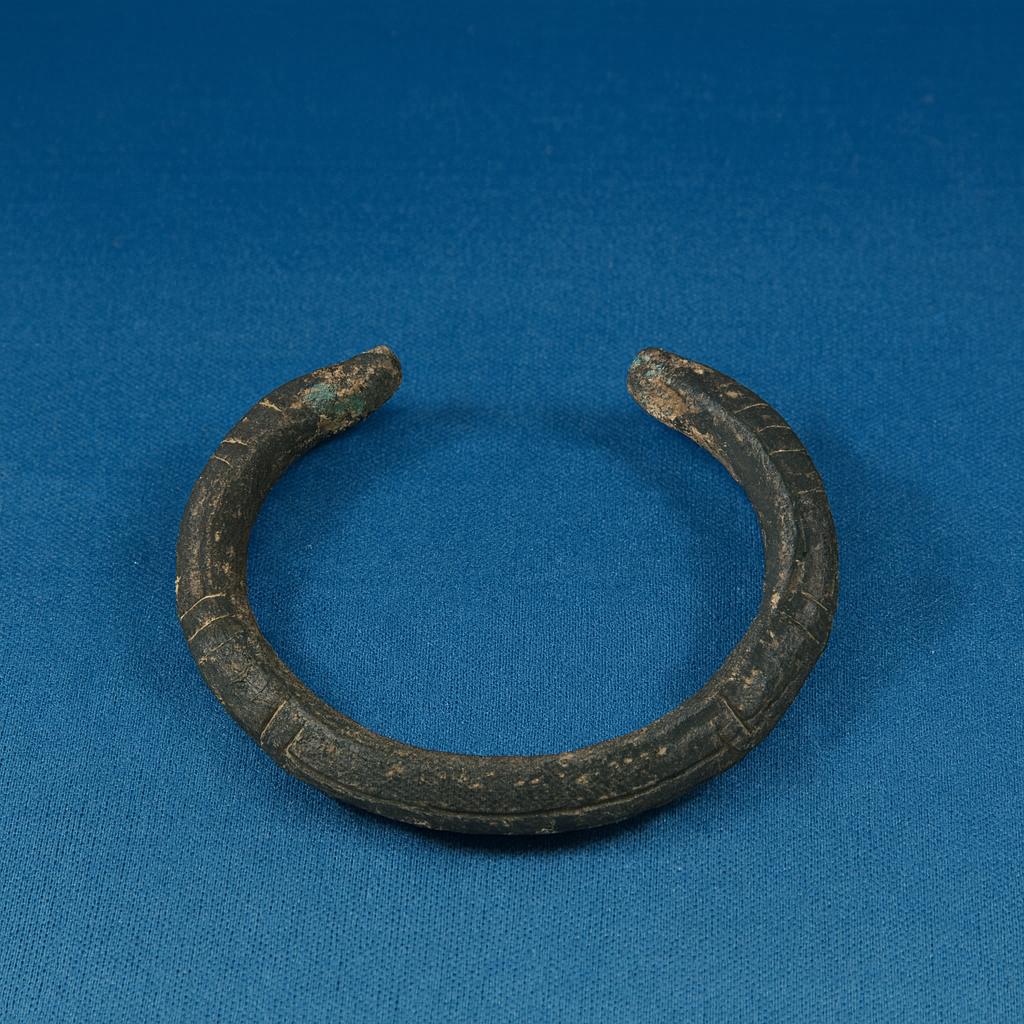
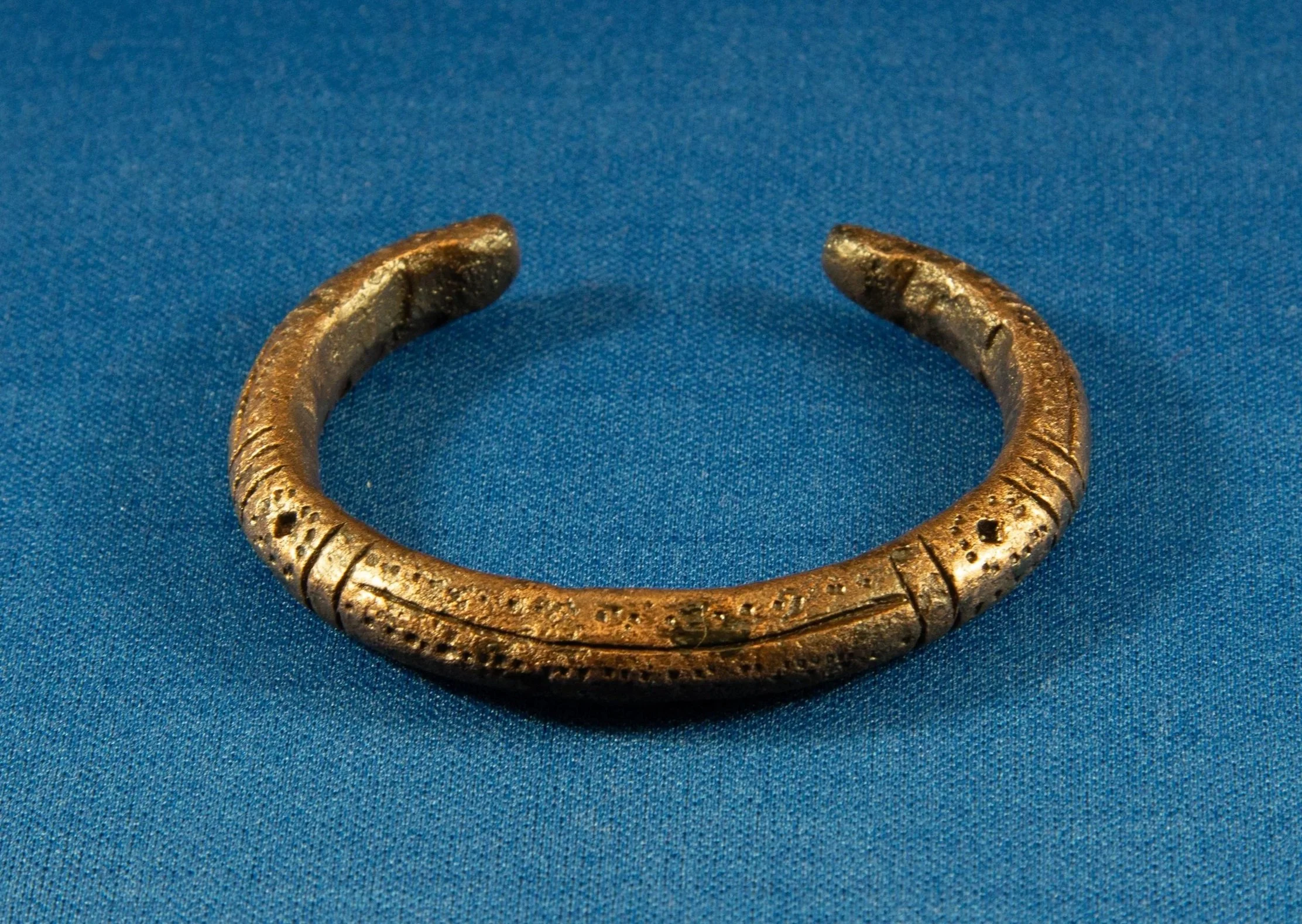
Ancient bronze bracelet with a weathered patina, lying on a blue background.
Black background with a vertical grayish-white arrow pointing downward in the center.
Ancient bronze bracelet with engraved patterns on a blue fabric background
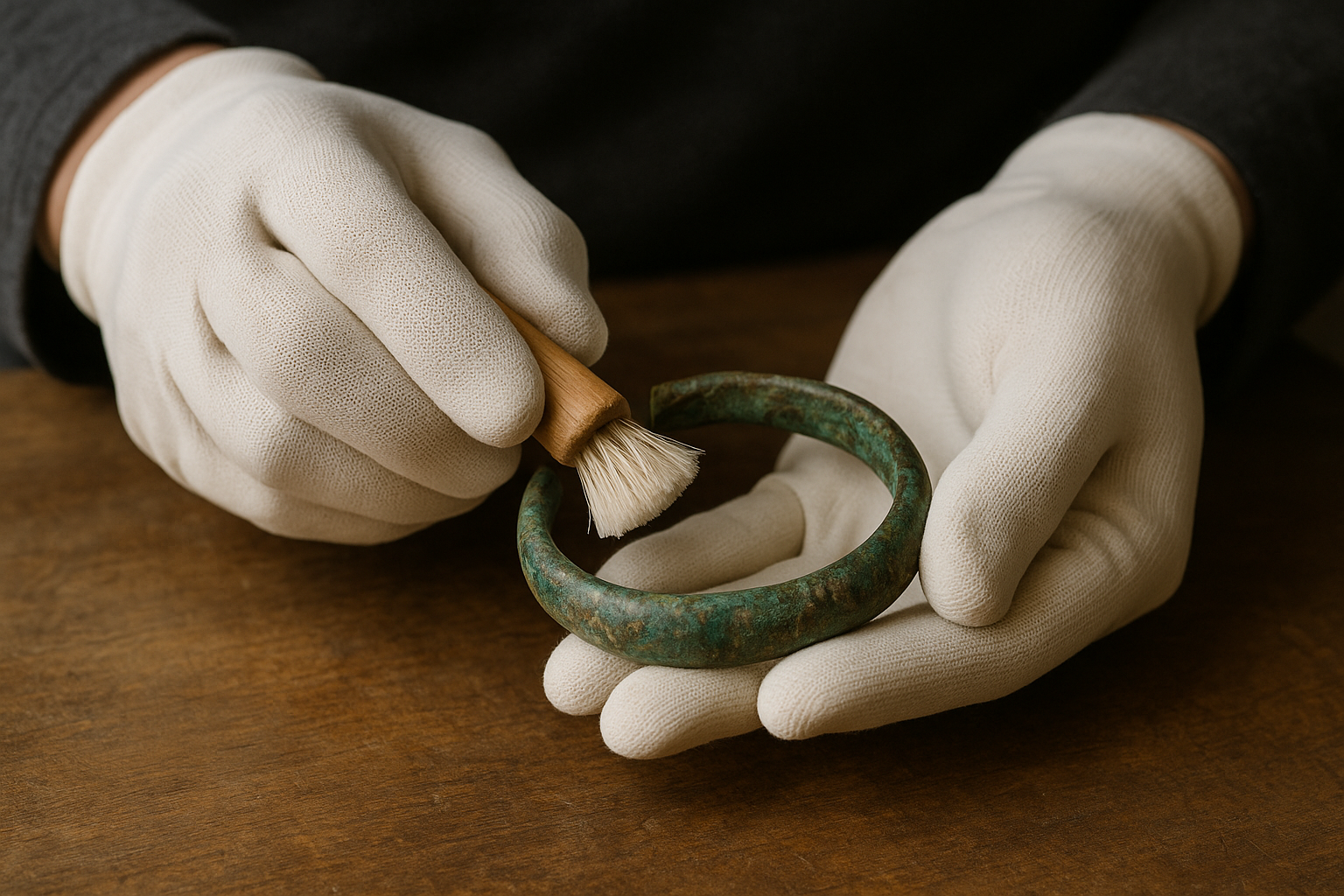
  • A person wearing white gloves is cleaning an ancient, greenish bronze bracelet with a small brush.

    Clean

    Gentle dry cleaning (wet in rare cases) removes debris and encrustation to expose patina, corrosion, and artistic detail.

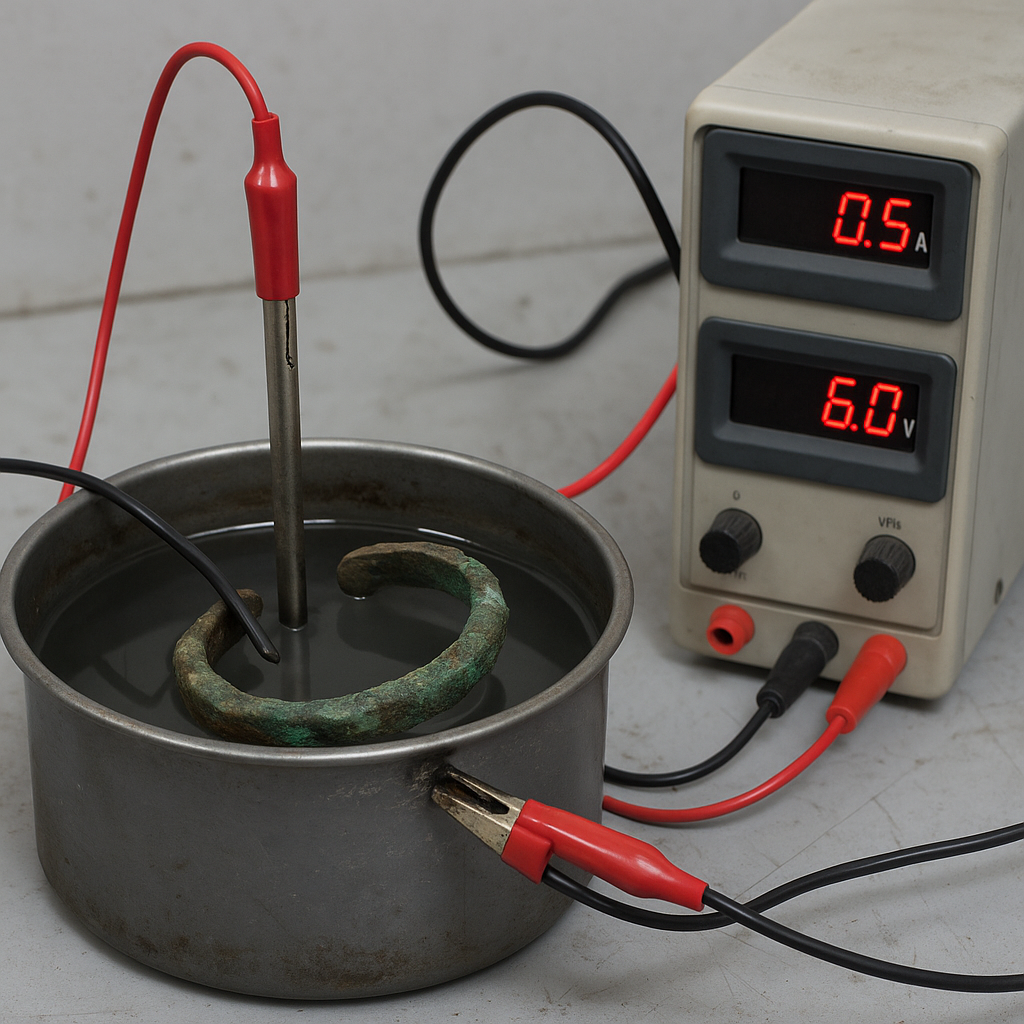
  • A scientific experiment shows a corroded metal object submerged in water within a metal container. A thermometer probe is inserted into the water, and a power supply provides 6.0 volts and 0.5 amperes, connected with red and black wires.

    Stabilize

    Electrolytic reduction and other methods are used to remove and stop “bronze disease” corrosion.

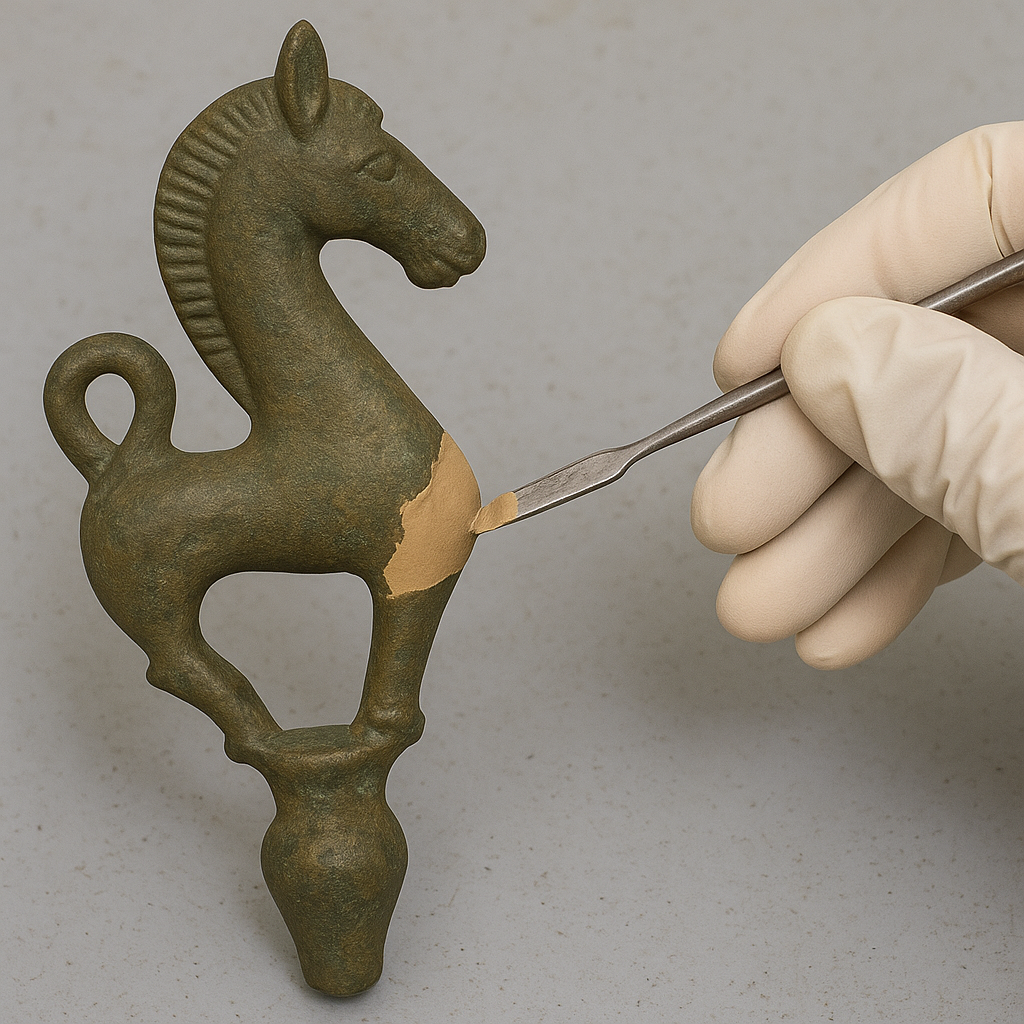
  • A gloved hand is using a small metal tool to restore or clean an ancient bronze horse figurine.

    Repair

    Repairs are conducted only if (1) there is risk of structural collapse, (2) the item was received in several pieces, or (3) the original form of the artifact would be lost without repair. In no case are artistic features replicated during this optional step.

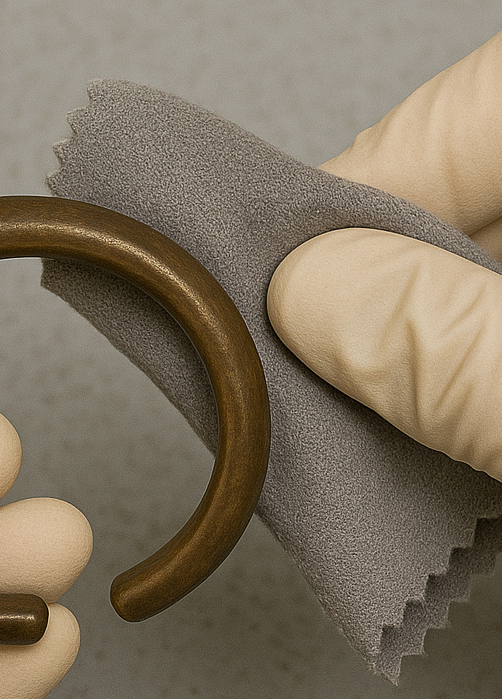
  • Close-up of a person polishing a brass handrail with a gray cloth, wearing beige gloves.

    Refine

    Gentle and non-chemical surface refinement of patina, or polishing to bare metal, is artfully done according to the needs of the artifact. No artistic feature is sacrificed during either of these processes.

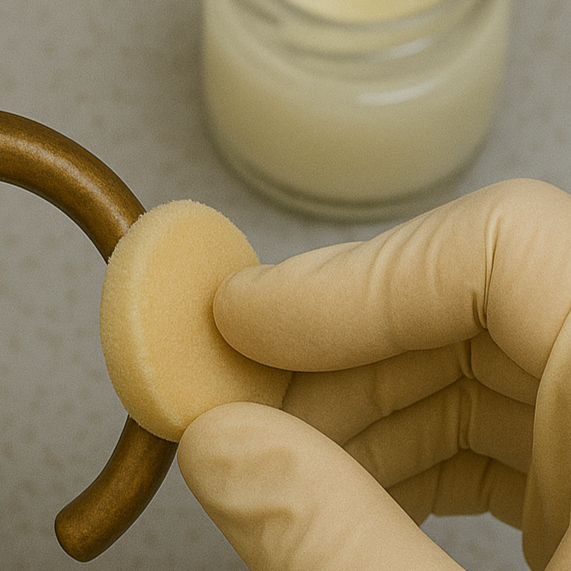
  • Someone wearing a latex glove is holding a small, round, sponge applicator, and applying a cream or moisturizer to a curved, brown handle or object. A jar of cream or moisturizer is in the background.

    Protect

    A thin layer of microcrystalline wax is applied and lightly buffed for a visually spectacular and protective finish.